2024

GeoMed
Drone-Based Medical Support
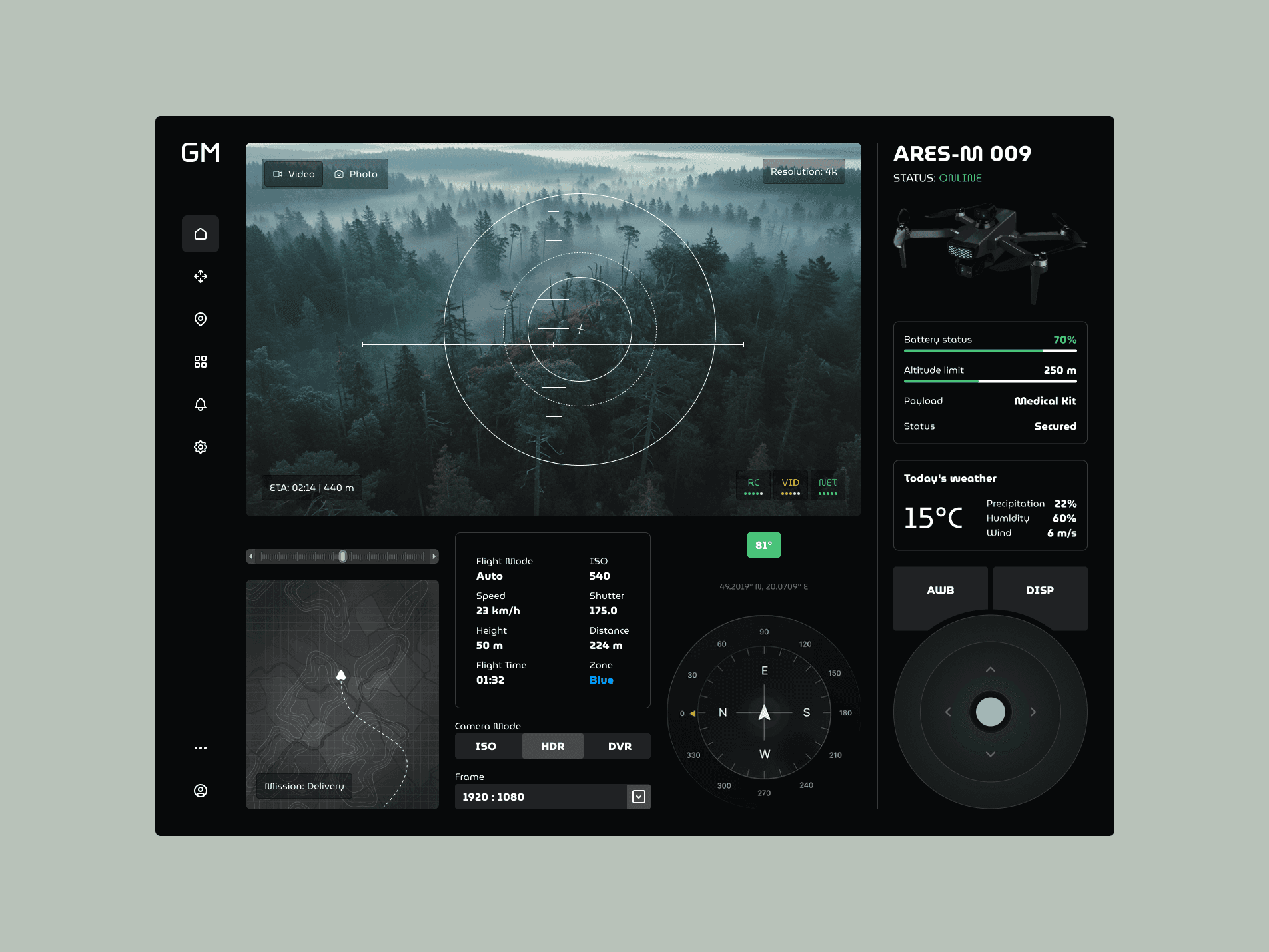
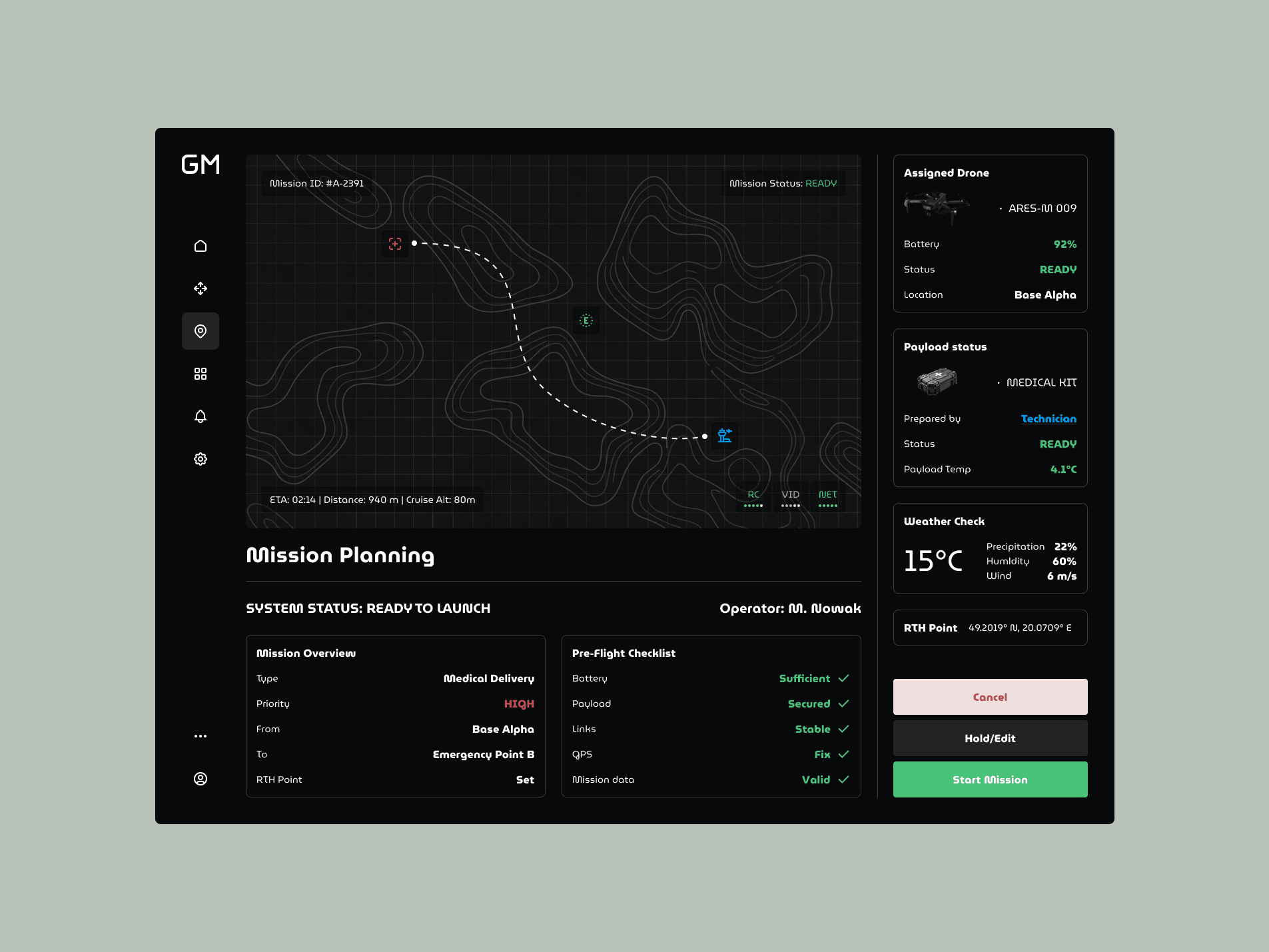
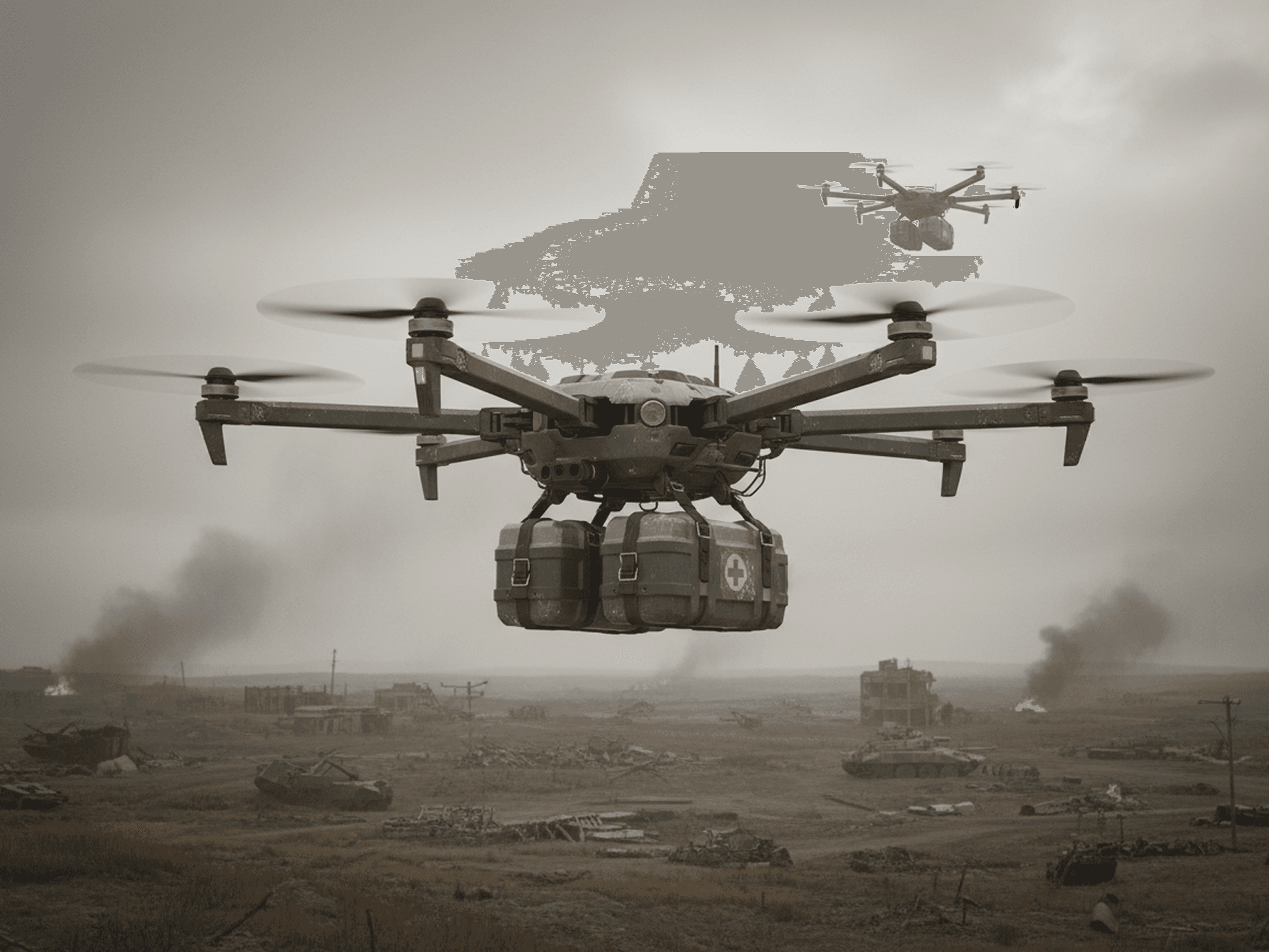
GeoMed is a mission-critical Tactical System designed to coordinate autonomous medical drone operations in active combat zones. The system enables rapid identification of wounded soldiers, precise geo‑location tracking, and the deployment of medical drones delivering life‑saving supplies or providing autonomous evacuation support.
GeoMed operates directly in the field through rugged mobile devices while maintaining a synchronized command layer for operational oversight. By combining geospatial intelligence, medical prioritization, and autonomous systems, GeoMed reduces response time during the most critical minutes after injury, increasing survivability on the modern battlefield.
The system is built for extreme conditions: limited connectivity, high cognitive load, and time‑critical decision‑making. Its interface prioritizes clarity, speed, and reliability, allowing operators and medics to act instantly with minimal interaction.
1. Problem Definition
Modern battlefields are highly dynamic, fragmented, and dangerous for human medics. Delays in medical response significantly reduce survival rates. The core problem was to design a system that:
Works reliably in field conditions
Minimizes cognitive load
Enables autonomous or semi‑autonomous medical response
Integrates geolocation and medical data in real time
2. User & Context Analysis
Primary users:
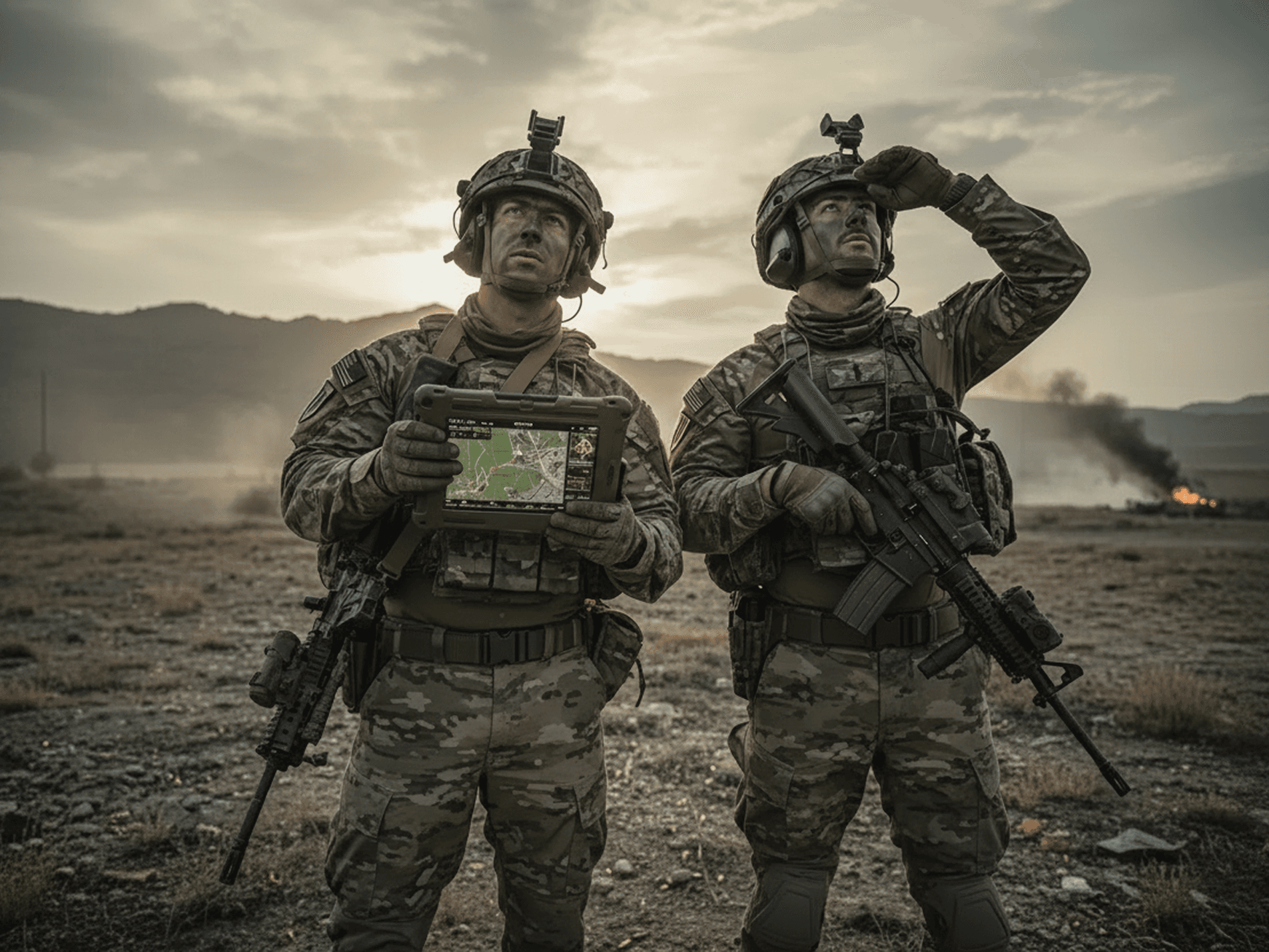
Field medics
Drone operators
Tactical commanders
Operating context:
High‑stress environments
Limited attention span
Harsh lighting and weather conditions
Intermittent or degraded network connectivity
These constraints informed every design decision, from typography size to interaction patterns.
3. System Architecture Thinking
GeoMed was conceived as a hybrid field system:
Field Layer – mobile, rugged interfaces used directly in combat zones
Autonomous Layer – drone logic, routing, and task execution
Command Layer – high‑level situational awareness and mission control
This separation ensures resilience and scalability while keeping field interactions lightweight and fast.
4. Information Hierarchy & UX Principles
Key UX principles:
Speed over completeness – only critical data is shown
Glanceability – information readable in seconds
Fail‑safe interactions – confirmation through system logic, not dialogs
Spatial awareness first – map and geo‑data as the primary UI element
5. Visual Design Direction
The visual language is inspired by military HUDs and tactical systems:
High‑contrast, muted color palette
Limited use of color reserved for alerts and medical status
Clear typographic scale optimized for outdoor readability
Modular UI components designed for rapid scanning
Visual noise was intentionally reduced to support decision‑making under pressure.
6. Prototyping & Validation
Low‑fidelity wireframes were used to validate information flow and interaction speed. High‑fidelity prototypes focused on:
Map interactions
Alert prioritization
Drone status feedback
Design decisions were continuously evaluated against real‑world constraints rather than aesthetic trends.
7. Outcome
The final GeoMed Field System delivers a clear, resilient, and highly focused interface capable of supporting autonomous medical operations in combat environments. The system balances advanced technology with human‑centered design, ensuring that critical medical support reaches the battlefield precisely when and where it is needed.